EMT-SF Derived Corpus
|
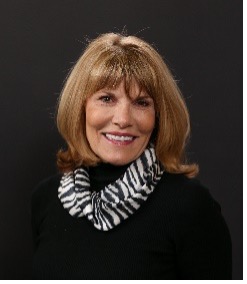
Ann Kaiser
Special Education
Vanderbilt University
ann.kaiser@vanderbilt.edu
|
|
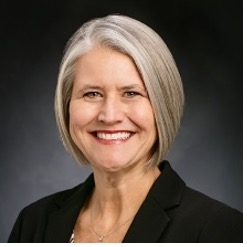
Pamela Hadley
Speech and Hearing Science
University of Illinois
phadley@illinois.edu
|
|
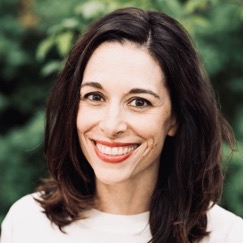
Megan Roberts
Communication Sciences and Disorders
Northwestern University
megan.y.roberts@northwestern.edu
|
The complete corpus is available in this zip file.
Citation
Roberts, M. Y., Hadley, P. A., & Kaiser, A. P. (2018). Maximizing
outcomes for preschoolers with developmental language disorders: Testing
the effects of a sequentially targeted naturalistic intervention.
Identifier NCT03782493. https://clinicaltrials.gov/study/NCT03782493
Roberts, M. Y., Hadley, P. A., & Kaiser, A. P. (2025). Maximizing
Outcomes for Preschoolers with Developmental Language Disorders.
Retrieved from https://osf.io/yad3f/
Hadley, P., Roberts, M., Harrington, E., Jones, M., Preza, T.,
Zanzinger, K., Kaat, A., Grauzer, J., & Kaiser, A. (in press).
Short-term effects of a caregiver-mediated intervention for preschoolers
at risk for developmental language disorder: A randomized controlled
trial. Journal of Speech, Language, Hearing Research. Advance online
publication. https://doi.org/10.1044/2026_JSLHR-25-00387n
Jones, M., Hadley, P., Preza, T., Harrington, E., Zanzinger, K.,
Kaat, A., Grauzer, J., Kaiser, A., & Roberts, M. (under review).
Improving outcomes for preschoolers at risk for developmental language
disorder: A randomized trial of Enhanced Milieu Teaching – Sentence
Focused (EMT-SF).
In accordance with TalkBank rules, any use of data from this corpus
must be accompanied by at least one of the above references.
Corpus Description
This dataset contains de-identified transcripts data from a
randomized controlled trial examining the effects of the Enhanced Milieu
Teaching–Sentence Focused (EMT-SF) intervention, an 18-month,
multi-phase caregiver-mediated intervention for children at risk for
developmental language disorder (DLD) (ClinicalTrials.gov: NCT03782493).
The trial enrolled 108 children between 30 and 31 months of age and
their caregivers. Children were randomly assigned to either the EMT-SF
treatment group or a control condition.
Toddlers and caregivers were enrolled in the clinical trial between
April 2019 and June 2023. Of these, three children received an autism
diagnosis during the course of the study and were excluded from all
analyses. Seven families did not consent to additional data sharing and
are not included in this dataset. As such, published results from this
database may differ from replication analyses using the archived
transcripts.
The majority of families participated in all aspects of the trial via
telehealth. Language samples were collected remotely via Zoom at seven
timepoints across four different contexts. Sample size for each
timepoint and context are detailed below:
| Timepoint | Book | Snack | Play | SDPT |
| 30 months | 97 | 95 | 98 | 89 |
| 33 months | 95 | 97 | 96 | 86 |
| 36 months | 91 | 90 | 91 | 89 |
| 39 months | 92 | 93 | 93 | 92 |
| 42 months | 90 | 89 | 90 | 90 |
| 45 months | 90 | 89 | 90 | 90 |
| 49 months | 91 | 89 | 92 | 91 |
Participant Characteristics
English was the only language spoken to the child in the home. At recruitment, children were excluded if they:
- Had a diagnosis of a neurodevelopmental disorder other than
developmental language disorder (DLD) or language delay.
- Had experienced a major medical event, medical condition, hearing
loss, or had observable oral motor difficulties.
All toddlers demonstrated:
- Nonverbal cognition within normal limits as measured by a T score
of 35 or greater (within 1.5 SD of the mean) on the Visual Reception
subscale of the Mullen Scales of Early Learning (Mullen, 1995).
- no clinical levels of autism-related behaviors, as measured by the
TELE-ASD-PEDS (Corona et al., 2020)
- Low to below average receptive language abilities, as measured by a
standard score of 95 or less on the Preschool Language Scales, 5th
Edition (PLS-5; Zimmerman et al. 2011) Auditory Comprehension scale.
- Below average expressive language abilities, as measured by a
standard score of 80 or below on the PLS-5 Expressive Communication
scale and/or two scores at or below the 10th percentile on the Words
produced, Mean length of three longest utterances, or Complexity on the
MacArthur-Bates Communicative Development Inventories: Words and
Sentences (CDI; Fenson et al., 2007).
Language Sample Contexts
Language samples were collected via Zoom to capture the
caregiver-child dyad interacting in a natural environment. A trained
assessor was on the call to address any technology issues and ensure the
caregiver and child stayed in frame. Children participated in a 30 min
caregiver-child interaction (CCX) involving three different language
sampling contexts and the SDPT AND T49BUS tasks:
- Book reading: At each timepoint, families received new books and
were recorded engaging in book reading with their child for 5 minutes.
Any utterance that is read verbatim from the book is marked with a [^
read] code in the transcripts.
- Snack: At each timepoint, caregivers provided a snack to their child
and were recorded engaging as they normally would during a snack for 5
minutes.
- Free play: At each timepoint, families received a new set of toys
and were recorded engaging in free play as they normally would for 20
minutes.
- SDPT: Children also participated in a structured elicitation task designed
to assess sentence diversity in young children under supported
conditions. Sentence Diversity Priming Task (SDPT; Krok et al., 2022;
Krok et al., 2026): The SDPT is presented as an interactive picture book
in which the adult and child take turns describing the actions of
animated characters and objects. The task uses 24 pairs of prime-target
sentences, including 12 with transitive verbs and 12 with intransitive
verbs.
- T49BUS: At 49 months, children completed the Renfrew Bus Story (Glasgow &
Cowley, 1994). Children’s story retelling was transcribed for later
scoring.
Transcription Procedures
Prior to transcription, research assistants demonstrated adequate
levels of agreement on three consecutive training transcripts, achieving
at least 90% morpheme-by-morpheme reliability for adult transcription
and 80% morpheme-by-morpheme reliability for child transcription.
Transcription was completed in multiple passes by trained research assistants.
- 1st transcription pass: 1st transcriber listened to adult and child
utterances no more than 3 times. Words/morphemes that could not be
transcribed within 3 repetitions were marked as unintelligible.
- 2nd transcription pass: 2nd transcriber completed a consensus pass,
relistening to the recording and confirming words/morphemes initially
transcribed as well as marking any part of the transcript that could not
be confirmed as unintelligible.
Transcripts were originally created in Systematic Analysis of
Language Transcripts (SALT) and converted to CHAT using the Salt2Chat
program during the final years of the project. Because of the various
deviations of SALT format from CHAT format and the lack of availability
for audio, it was not possible to include these data in the main CHILDES
database.
Further details of data collection and recording, participant
demographics, examiner and transcriber training, play scenarios, and
transcription conventions can be found in resources and publications
made available on the trial’s OSF website: https://osf.io/yad3f/.
Dataset
Datasets generated from the Maximizing Outcomes for preschoolers with
DLD clinical trial will also be available via Dryad at
https://doi.org/10.5061/dryad.sj3tx96g9. Individuals using these
datasets should cite the grant and key publications describing the
database and measures in any resulting presentations and publications.
Acknowledgements
This study was supported by National Institute of Deafness and Other
Communication Disorders Grant U01DC017135, awarded to Ann Kaiser, Pamela
A. Hadley, and Megan Y. Roberts. More information about the clinical
trial can be found on the trial’s OSF website: https://osf.io/yad3f/. We
are grateful for the commitment of the participating families and to the
numerous project staff and students who assisted with data collection,
transcription, and preparation of files for data sharing.