CHILDES English Braunwald Corpus
|
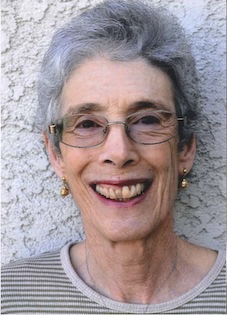
Susan R. Braunwald, PhD
19191 Harvard Avenue #102 E
Irvine, CA 92612-4653
sbraunwd@cox.net
|
| Participants: | 1 |
| Type of Study: | case study |
| Location: | USA |
| Media type: | audio |
| DOI: | doi:10.21415/T5D89Z |
Citation information
Publications using these data should cite any of the references below.
- Braunwald, S. R.
(1971). Mother-child communication: the function of
maternal-language input. Word, 27(1-3), 28-50.
- Braunwald, S. R. (1978). Context, word and meaning: Toward a
communicational analysis of lexical acquisition. In A. Lock (Ed.),
Action, gesture and symbol: The emergence of language. London:
Academic Press, pp. 485-527.
- Braunwald, S. R. and Brislin R. W. (1979a). The diary method
updated. In E. Ochs and B. B. Schieffelin (Eds.), Developmental
pragmatics. New York: Academic Press, pp. 21-42.
- Braunwald, S. R. and Brislin, R. W. (1979b). On being understood:
The listener's contribution to the toddler's ability to communicate. In
P. French (Ed.), The development of meaning: Pedolinguistic
series. Japan: Bunka-Hyron Press, pp. 77-121.
- Braunwald, S. R. (1980). Egocentric speech reconsidered. ERIC
Document Reproduction Service. Resources in Education.
- Braunwald, S.R. (1983). Why social interaction makes a difference:
Insights from abused toddlers. In R. Golinkoff (Ed.), The transition
from prelinguistic to linguistic communication. Hillsdale, New
Jersey: Lawrence Erlbaum, Associates, pp. 235-259.
- Braunwald, S. R.
(1985). The development of connectives. The Journal of
Pragmatics, 9(4), 513-525.
- Braunwald, S. R.
(1993). Differences in two sisters' acquisition of first verbs. ERIC
Document Reproduction Service. Resources in Education.
- Braunwald, S. R. (1995). Differences in the acquisition of early
verbs: Evidence from diary data from sisters. In M. Tomasello & W. E.
Merriman (Eds.), Beyond names for things: Young children's
acquisition of verbs. Hillsdale, NJ: Lawrence Erlbaum Associates,
pp. 81-111.
- Braunwald, S. R. (1997). The development of because and so:
Connecting language, thought and social understanding. In J. Costermans
& M. Fayol (Eds.), Processing interclausal relationships in the
production and comprehension of text. Hillsdale, NJ: Lawrence
Erlbaum Associate.
In accordance with TalkBank rules, any use of data from this corpus
must be accompanied by at least one of the above references.
The Braunwald Corpus (Journals 2-8) can now be linked to The Susan R.
Braunwald Language Acquisition Diaries (2015) at calisphere.org This version is a
redacted pdf of the original handwritten diary that contains Journals 1
and 9 and has been archived until 2071. The content of the numbered
entries varies as a function of L’s development, but the basic format is
a speech event and a description of the situational context. The
subsequent dated annotations on the pdf pages are formatted to preserve
the integrity of the original diary data exactly as they were entered.
There are two informational guides to the database: 1) an Introduction
to the Collection, a concise description of the scope and content of
the data, and 2) an Introductory Volume, an extensive and varied source
of the information that a parent-diarist knows.
Project Description
As the name of this corpus implies, the Braunwald-Max Planck
contribution to CHILDES represents a collaborative endeavor between
Susan R. Braunwald, the parent-diarist who collected the data, and
researchers at The Max Planck Institute of Evolutionary Anthropology
(MPI-EVAN), who transcribed, proofread, and created the readme files of
the electronic version of the diary study on Laura Braunwald (henceforth
L) which includes a handwritten daily diary and audio recordings.
First, I will discuss the purpose and scope of the original diary study.
Then, I will describe the subset of the data included in the
Braunwald-Max Planck corpus. The full set of diary notes is archived in
PDF format at the UC Irvine Library and can be downloaded from this
link: http://ucispace.lib.uci.edu/handle/10575/11954.
The Original Diary Study
Goal of the Diary Study: The theoretical purpose of the diary study on L
was to address the following question: How do children acquire the
ability to speak a native language? My goal was to document the overt
process of the same child’s language acquisition in a naturalistic
real-world environment and in relation to the developmental sea change
between late infancy and early childhood. I hoped that a careful,
ecologically valid longitudinal description of L’s language production
would suggest interesting hypotheses about the longitudinal progression
of a covert mental process, and, thereby, provide some insight into the
organization of the biological substrate of the human ability to acquire
language.
I kept the diary study on L from 1971 to 1975 in order to investigate
the same theoretical question that Deb Roy at M.I.T. addressed in the
continuous video sample of his son’s language acquisition at home.
Although none of today’s advanced technology existed in 1971, the
theoretical reason why I created the diary study on L was fundamentally
comparable to Roy’s collection and analysis of a massive technologically
sophisticated longitudinal study on a single subject. In fact, there was
even one potentially interesting advantage to the technological
simplicity of a handwritten diary. I was able to keep a record of L’s
language wherever and whenever I noticed an example that met the
criteria for entering data into the diary. As a result, the handwritten
diary on L contains examples of her emergent language in many different
cultural contexts outside of her immediate home environment.
Scope of the Diary Study: I kept systematic observations of L’s
communicative behaviors during her late infancy and daily diary entries
between her first and her fourth birthdays. The entire diary study
consists of 9 volumes of handwritten diary entries and approximately 60
hours of audio recordings. As an experienced parent-diarist, I was aware
of the potential methodological shortcomings of handwritten diary data.
I, therefore, carefully planned the diary study on L to compensate for
these problems. (See Braunwald & Brislin, 1979a, for a complete
methodological description of the diary study on L.)
The Handwritten Diary
The criteria for entering the handwritten diary data changed
longitudinally as a function of L’s language development. Between L,
aged 0;8.0 and 2;03.21, emergent language was the only criterion for
entering data into the diary. I used the term language amorphously as
shorthand for any observable form of behavior that struck me as
intentional and language-like in relation to its context of use. This
criterion cast a wide net that enriched the description of a process
that included false starts, informative errors, idiosyncratic
strategies, and developmental shifts in the linguistic interface among
pragmatics, semantics and syntax. To summarize, this portion of the
diary data is theoretically neutral and free of a priori expectations
about either the process of language acquisition or the linguistic
organization of early child language.
On June 10, 1973, at L, aged 2;03.21, I could no longer keep track of
all her emergent language. In order to continue the diary, I narrowed my
focus to three general categories that were intended to describe the
relation between language and thought from different but complementary
perspectives. These categories were causality, time and single sentences
that contained two verbs regardless of their linguistic function. I
maintained the basic methodological principle of entering emergent
examples into the diary. I entered any of L’s recognizable attempts to
talk about causality or time either explicitly or implicitly and
regardless of the linguistic complexity of her language. I also
consciously monitored L’s speech for utterances with two verbs and
entered all I noticed into the diary. These new criteria for data entry,
while modest in comparison to all emergent language, still cast a wide
net. (See Braunwald, 1997 & 1995, for research based on these criteria.)
The Audio-Recorded Data
The audio-recorded samples were a planned and systematic attempt to
compensate for the intrinsic methodological problem of verifying the
accuracy of a handwritten parental diary. Audiotapes 1 – 18 can be used
to check the reliability of my observations in Journals 1 − 6. By about
3, L spoke English fluently, and I found it hard to write down her
complex language as well as the many conversational turns in a single
speech event. I had to resort to a “catch-as-catch-can” diary record or
end the project. As my handwritten entries became less precise and more
anecdotal, I made supplementary audio-recorded samples at irregular
intervals to illustrate and to augment the content in Journals 7 – 9.
The Control Data
After trying to record tapes in various contexts, I
selected mealtimes as a longitudinally stable and recurrent context for
the following reasons: 1) the context of a mealtime was basically
limited and known; 2) L’s mobility was limited so that she remained
within the range of the microphone; 3) the social interaction at a meal
required many different linguistic skills 4) the context per force
provided examples of L’s participation with different configurations of
interlocutors (e.g., from L and her mother alone to social situations
with guests present); and 5) the longitudinal advances in L’s language
development would affect the quality of her participation. These
advantages outweighed the obvious disadvantages of unwanted background
noise and cross-conversation which excluded L.
The Supplementary Data
By her third birthday, L’s emergent language
became prominent and interesting because it functioned as a social tool
that altered the experiential quality of her life. My observations in
Journals 7 – 9 were influenced to an unknown degree by my interest in
the relation between language and thought. I deliberately recorded
samples of L’s language in contexts that elicited egocentric speech as
it was described by either Piaget or Vygotsky. I also recorded
conversations with me, play with her older sister and mini-experiments
in which L was pragmatically superior to a pretend listener. Although
the theoretical purpose of these samples was deliberate, they were
unplanned insofar as the period of time between them was inconsistent.
To summarize, the control data function as a systematic means to
compensate for a fundamental methodological criticism of a handwritten
diary (Journals 2 – 6 and tapes 1 – 18). Once L mastered sufficient
English, the impromptu supplementary tapes illustrate how language made
it possible to enrich her understanding of and self-expression in social
relationships and to participate in an environment that was created by
using the shared knowledge of a common language (Journals 7 - 9 and
portions of tapes 19 - 33).
Summary of the Diary Study
The purpose of the diary study on L was to describe the longitudinal
process of a single subject’s language acquisition in the naturalistic
context of her daily life in a real-world environment. The diary study,
which ultimately included 9 volumes of handwritten data and about
60-hours of audio recordings, was the best method available to monitor
L’s language development as continuously as possible. The diary study on
L situates language acquisition into the realistic developmental context
of a child’s life. Consequently, the distinction between
decontextualization—the use of known language in a novel linguistic
context —and displacement—the symbolic potential of language to create
shared knowledge of an otherwise unknowable personal experience or
thought—can be studied in the data on L.
The Braunwald-Max Planck Corpus
The Braunwald-Max Planck corpus is a substantial digitized subset of
Braunwald’s original diary study on L. This version of the data makes it
possible to access the diary study electronically, using programs such
as CLAN. Researchers can now use these data to investigate theoretical
questions that can be addressed quantitatively with the codes in
CHILDES. These data can also be used as input to computational models of
a specifically defined process in the acquisition of language.
Electronic version of The Handwritten Diary
This corpus contains Journals 2 – 8 of the daily diary data. It includes
31-months of the daily diary data on L, between 15-and-46 months of age.
Each CHAT file contains the separate speech events that were entered in
the diary on any given day. Each speech event includes the relevant
turns in discourse of the participants who interacted with L. The line %
sit links each speech event to its location in the original handwritten
diary and to my extensive context notes and any added methodological
clarification of an entry. Although this information can be retrieved
easily, to do so requires access to the original handwritten diary.
The Transcriptions of the Audio Data
MPI-EVAN digitized and transcribed the majority of my original cassette
recordings and several reel-to-reel tapes. The CHAT transcriptions
contain all of L’s speech and any speech events in which she
participated. These transcriptions constitute an important contribution
to the diary study. They complement the handwritten diary data at an
important developmental transition when L, at 17 months of age, was
just starting a vocabulary spurt. Although I recorded the samples,
MPI-EVAN deserves full credit for transcribing these samples into CHAT
files and making them available to CHILDES. Moreover, these
transcriptions are free of any identifying information other than L’s
name. L’s name can be changed easily so that this database can be
separated from the handwritten diary and used anonymously.
Summary and Privacy
The Braunwald-Max Planck corpus lacks the detailed information in the
original diary study that describes the transitional period from late
infancy to the sustained onset of the production of a child language
version of English. Nevertheless, this corpus represents a major
contribution of a large longitudinal database of daily handwritten diary
data and complementary audio recordings from a single subject. This
database is exceptionally rich beginning at L, aged 17-months and onward
because there are two sources of data that can be cross checked. Any
researcher interested in linguistic topics related to the longitudinal
development of language production would find valuable information in
this corpus. In conclusion, the Braunwald-Max Planck contribution to
CHILDES is a valuable corpus of longitudinal data on the process of
language development as it was observed in the same child in the actual
cultural contexts of a toddler’s life 40-years ago.
This corpus contains naturalistic data on a developing child who led an
active and real life that included many people as well as some
spontaneous family interactions that lacked any social desirability
effects. With the exception of child language research, I have always
used pseudonyms on topics that come from these data. Moreover, many of
the children mentioned in this corpus are now 40-year-old adults. I
never requested their parents’ permission to record their language and
behavior as data in a diary study. Please respect their privacy and
submit any examples from the handwritten diary or from the sound files
linked to the transcriptions that you intend to use publically in any
form—i.e., a presentation, an online publication or a print
publication−to Susan R. Braunwald.
Researchers who are interested in the transitional period which is not
included in this corpus or who need contextual information from the
original diary data can contact Susan R. Braunwald.
Max Planck Transcriptions of the Audio Recordings
Below you will find some additional details relating to the
transcriptions of the audio recordings made by the Max Planck team.
Please email Elena Lieven (lieven@eva.mpg.de <mailto:lieven@eva.mpg.de>)
or Jeannine Goh (Jeannine.M.Goh@manchester.ac.uk
<mailto:Jeannine.M.Goh@manchester.ac.uk>) if you require further
clarification.
The Laura data consists of 33 audiotapes spanning the age 1-05-09 to
7-00-14. The data starts off quite dense, but between the ages of five
and seven there are only four tapes. Laura’s mother often records four
or five days on one tape and these segments were split into separate
chat files during the transcription process, and were then labeled by
the exact age of Laura. The transcript files include an @Comment line
that gives the names of the original 33 audiotapes.
Notes about the labeling of the data
• If the date is estimated it is recorded. Most of the dates were clear from the recordings and the mother’s notes.
• If two recordings are made on the same day they are listed as a and b i.e. 1-06-00a and 1-06-00b
• The date could not be estimated for tapes 14:1 and 14:2 which are called 2-03-XXa and 2-03-XXb they are likely to be around 2-03-08
• The date could not be estimated for tape 30 which is called xx-Dec-75 4-10-xx
General notes
• Although Laura’s name has been kept in the transcripts any material that could identify the family has been coded, for example, Jwww [% sister].
• Although the best has been done to distinguish Laura from her sister there was the odd occasion when this was difficult. In these instances the utterance was listened to by a second transcriber who checked that the differentiation between Laura and her sister was uniform across all the transcribers’ work.
• In some tapes, due to the age of the recordings, the speaking was not clear, or there was too much echo.