ClassBank English MultiEd Corpus
|
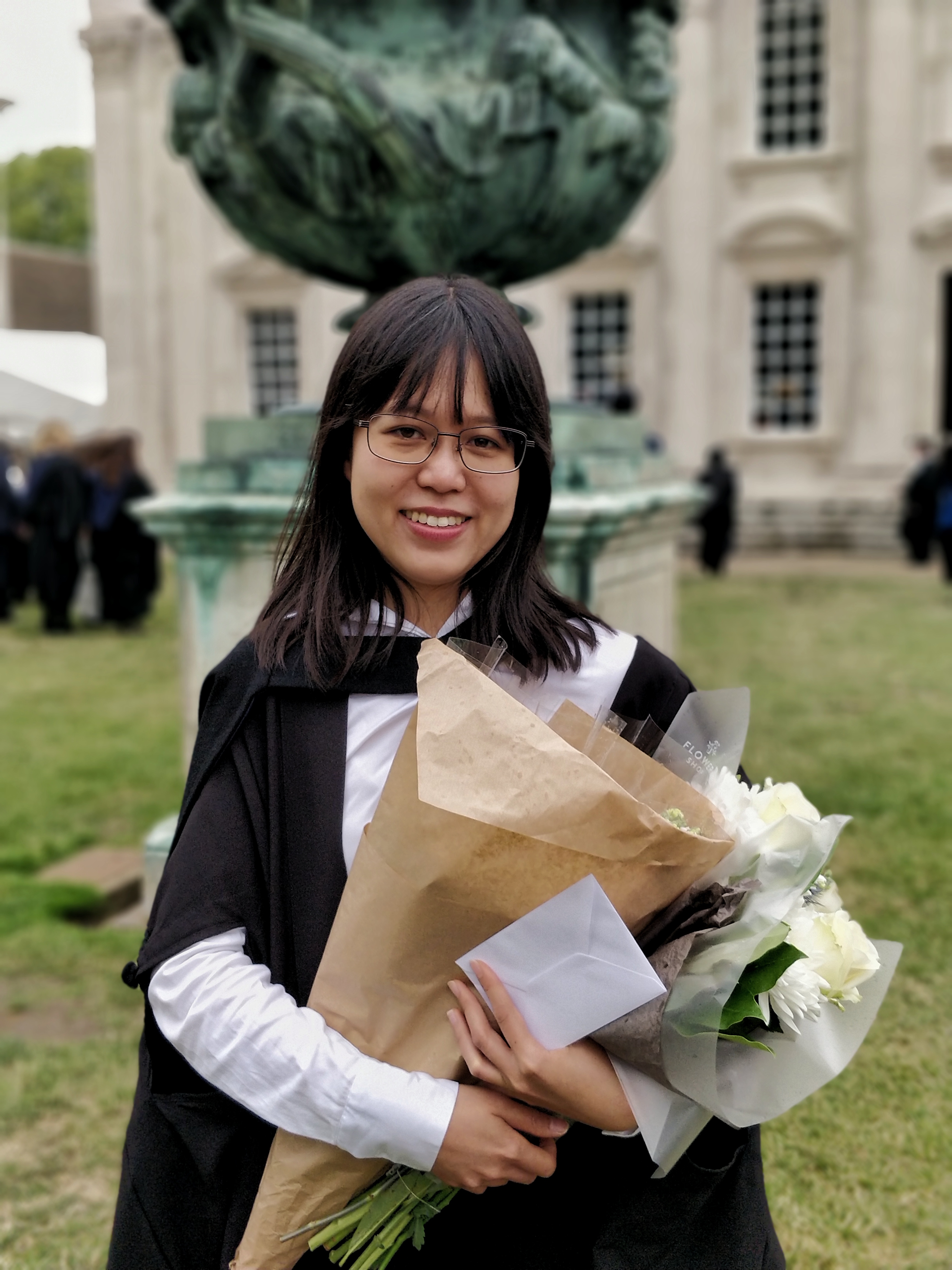
Samantha Sie
Theoretical and Applied Linguistics
University of Cambridge
slws2@cam.ac.uk
|
|
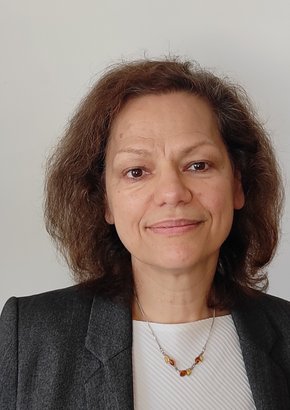
Ianthi Maria Tsimpli
Theoretical and Applied Linguistics
University of Cambridge
imt20@cam.ac.uk
|
|
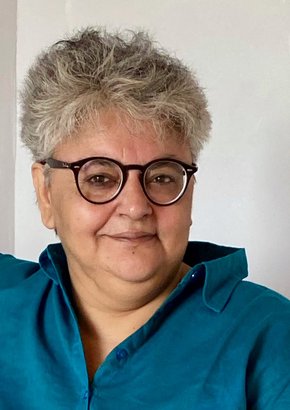
Ayesha Kidwai
Centre for Linguistics
Jawaharlal Nehru University
ayesha@jnu.ac.in
|
Browsable transcripts
Download transcripts
Media folder
Citation information
Sie, S., Tsimpli, I. M., & Kidwai, A. (2026). The MultiEd Teacher Talk Corpus. TalkBank. https://doi.org/10.21415/krcn-as65
In accordance with TalkBank rules, any use of data from this corpus
must be accompanied by at least one of the above references.
Project Description
The Multilingualism in Education (MultiEd) project (2023-2026) was
conducted with the aim to investigate, document, and optimise lesson
delivery in English medium instruction (EMI) by means of pedagogical
translanguaging in India. In this context, translanguaging involves the
use of the home and regional languages of students and teachers to
scaffold learning and facilitate teaching.
The strong societal demand for EMI schools in India reflects the
value and prestige English carries locally. English is perceived not
only as a language that grants access to knowledge but also as a
language that enables upward social mobility. In spite of the Indian
government’s effort to promote mother-tongue education, particularly in
the early years of school, many parents across social classes aspire to
enrol their children in EMI schools. Subsequently, India has over the
years witnessed an increasing number of EMI schools established in
response to this societal demand.
As a result, children attending EMI government schools mostly come
from socioeconomically underprivileged families. Without adequate
exposure to English and literacy support at home, these children are
faced with a language barrier that impedes their overall learning
experience and outcomes. To mitigate this, teachers engage in
translingual practices, utilising their students’ linguistic resources
to scaffold learning in the target language that is English.
Accordingly, the Teacher Talk Corpus (TTC) study – one of the
research strands of the MultiEd project – presents an evidence-based
documentation of lessons carried out by teachers in real classrooms.
Importantly, it showcases teachers’ use of language, including
naturalistic translanguaging.
Corpus description
The TTC is a small corpus comprising nine transcripts, which amount
to 26,186 words and 5,587 utterances from approximately 6 hours 47
minutes of recorded speech. The audio recordings were carried out in
Grades 4 and 5 English Language classrooms across four government-aided
primary schools in New Delhi, India.
Seven English Language teachers (sex: 5 female, 2 male; age range:
31 – 45 years) took part in the TTC study. They were all multilingual
speakers of at least Tamil, Hindi, and English. Most of them (n=6)
acquired Tamil as their home or first language (L1), apart from one
teacher whose L1 was Kannada. Another teacher acquired four languages
including Malayalam in addition to the languages mentioned above. For
all of them, Hindi and English were acquired as subsequent languages.
All seven teachers were university graduates: four of them were
bachelor’s degree holders whereas the remaining three attained a
master’s degree. All of them also undertook formal teacher training:
most of them (n=6) had a Bachelor of Education, apart from one, who
obtained a Diploma in Education.
The teachers had an average of 10 years (range: 7 – 15 years) of
teaching experience at the time of data collection (2024).
In compliance with the UK’s Data Protection Act 2018, unique IDs
were assigned to the teacher participants to protect their anonymity.
Any callouts of personal names (e.g. names of students, teachers,
research assistants) in the audio recordings were bleeped out; these
names have also been replaced with fictitious names in the transcripts
to ensure the anonymity of individuals.
Acknowledgements
The MultiEd project was funded by the British Council and awarded to the
University of Cambridge (Cambridge Partnership for Education at
Cambridge University Press & Assessment). The project was led by
Professor Ianthi M. Tsimpli from the Department of Theoretical and
Applied Linguistics as the Principal Investigator. We would like to
thank Akshit Singh, Sankrithi Loganathan, and Sarannaya Bose for
assisting with the transcriptions, as well as to Professor Brian
MacWhinney and his team for their support with the morphological tagging
and formatting of the corpus.