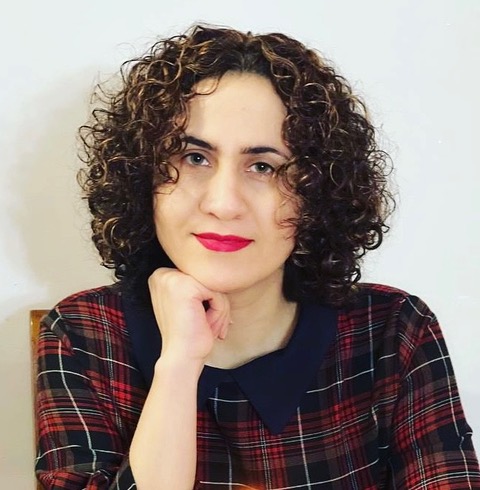
Parisa Tarahomi
Linguistics
Memorial University Newfoundland
ptarahomi@mun.ca
|
|
Parisa Tarahomi Linguistics Memorial University Newfoundland ptarahomi@mun.ca |
| Participants: | 3 |
| Type of Study: | naturalistic |
| Location: | Iran |
| Media type: | audio |
| DOI: | doi:10.21415/4zp9-tb63 |
Tarahomi, Parisa & Yvan Rose. (in preparation). Word-final Syllabification in Persian: Distributional and Developmental Evidence.
Tarahomi, Parisa & Yvan Rose. 2023. The Development of Medial and Final Codas in Persian, Proceedings of the 2022 Annual Conference of the Canadian Linguistics Association.
In accordance with CHILDES rules, any use of data from this corpus must be accompanied by at least one of the above references.
This study follows the naturalistic tradition to studying language acquisition. It consists of the longitudinal study of three Persian learning children participants who were recorded over a period of three years, between 2018 and 2021.
The main purpose of the recording sessions was to capture samples of the children's speech in the most natural way possible. Accordingly, all the sessions were conducted in the form of natural conversations between the children and their caregivers while they were playing with toys, looking at photo albums, singing songs or narrating stories. For the early sessions, during which the children produced fewer words, the conversations mostly consisted of informal naming tasks. In such conversations, the children were shown toys and pictures and were asked to name what these objects represented. Later, when the children had learned more words and could produce longer phrases and sentences, the recordings included more storytelling and spontaneous speech.
All three participants were audio-recorded using a Zoom H1n handy recorder with built-in electret condenser microphones. The output sound file format is WAV with a 24 bit sample size recorded at a 96 kHz sample rate. In some cases, especially at the beginning of the observation period, some of the sessions were recorded using a cell phone recorder, and saved in a lossless format. The recording equipment was strategically placed beyond the child's sight. This approach minimized interference with the child's normal surroundings, reducing the risk of distraction or self-consciousness that might arise from children's natural curiosity about electronic devices. Recording sessions were aimed at 30 to 45 minutes for all participants, though the younger children often had shorter sessions due to limited attention spans or occasional irritability.
These data were prepared using the Phon software program (https://www.phon.ca/). The data were segmented, transcribed, and annotated by the investigator, a native speaker of Farsi. The transcriptions were then verified for syllabification and alignment prior to data compilation.