All societies have rules of exogamy, closely related to incest taboos, which specify the ranges and categories of relatives who are considered forbidden marriage and sexual partners. These are always the most closely related biological kin, and prohibitions on sexual relations and marriage between parents and children and brothers and sisters are universally applied. Most societies also extend these restrictions to other close relatives, but the ranges and categories included vary. Among other functions, incest taboos and exogamous regulations force people to extend their circle of contact, cooperation and alliance beyond their immediate circle to link small kin groups into wider social constellations.
Societies are not only concerned with restricting marriages among closely related kin but also on specifying rules that channel individuals into marriages within particular categories and groups. Even in contemporary Western societies, individuals are encouraged and sometimes forced to marry within ethnic and religious groups and consistently express preferences for mates from similar class and educational backgrounds, in spite of our pervasive emphasis on love and individual choice.
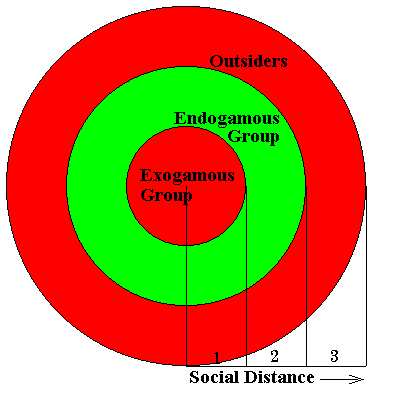
According to considerations of exogamy and endogamy, we can represent marriage patterns as determined by a society's concept of social distance as indicated in the following diagram:
The diagram specifies three ranges of relationship: