CHILDES Clinical Spanish ChromoLang Corpus
|
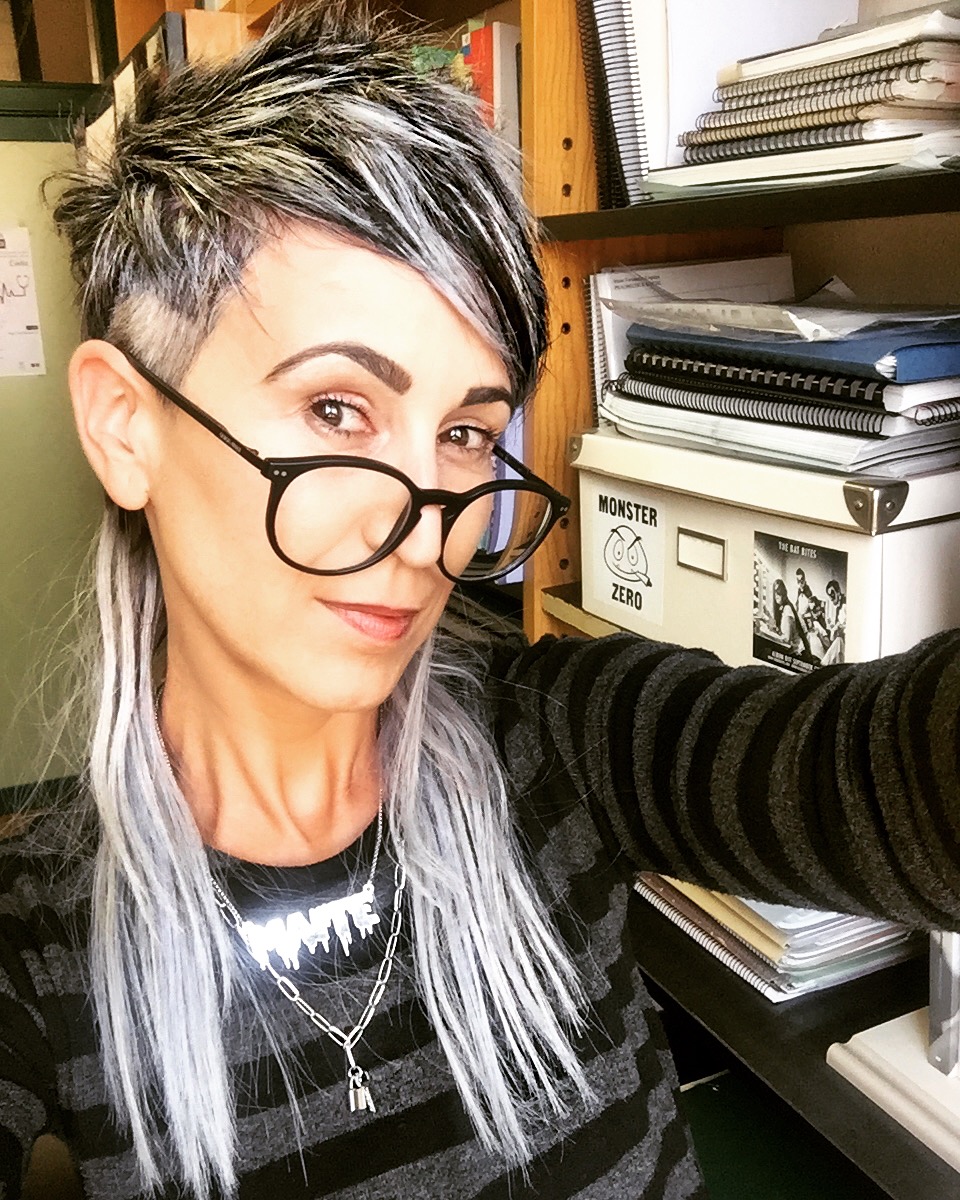
Maite Fernández-Urquiza
Linguistics
University of Oviedo
fernandezmaite@uniovi.es
|
|
|
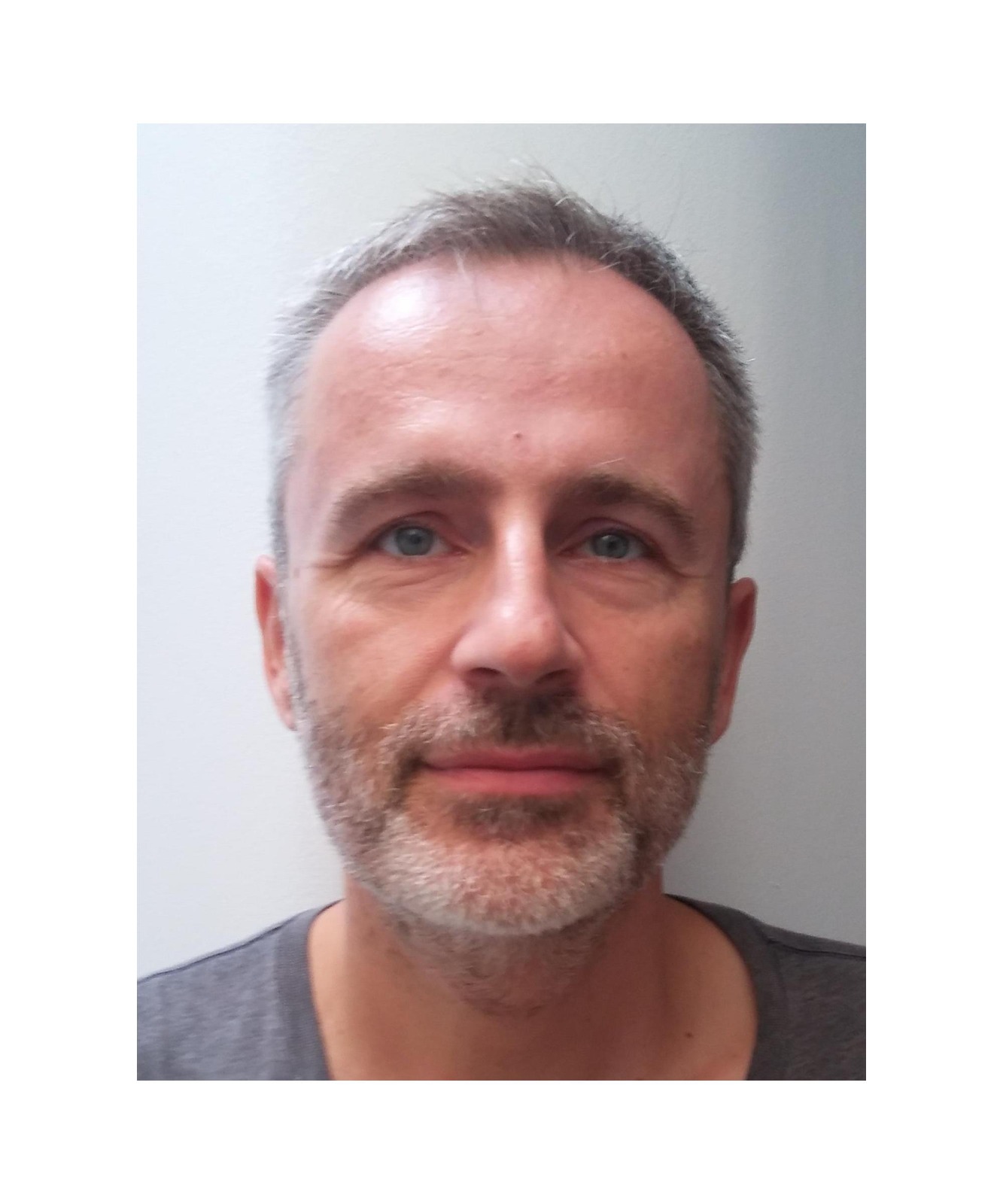
Antonio Benitez-Burraco
Linguistics
University of Sevilla
abenitez8@us.es
|
|
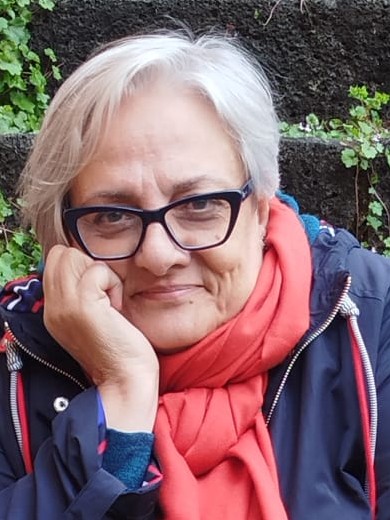
Maria Salud Jiménez Romero
Education
University of Córdoba
rojisa61@hotmail.com
|
Because ChromoLang uses special codes and because the transcripts are not linked to the video,
the full collection of original transcripts, along with the pragmatic coding in the %xepr lines, is available in
this zip file The files in the browsable database were created
through ASR and are mostly just useful for playing back video with an emphasis on the parents'
speech. Correct encoding of the details of the speech is in the ChromoTrans files. Privacy
considerations require that access to the
video requires that permission be granted by the data contributors.
Citation information
In addition, some bibliographical references must be cited when using the different transcripts or video files of the CHROMOLANG corpus:
- When using 1JCL.cha or the corresponding video file please cite Benítez-Burraco, A., Barcos-Martínez, M., Espejo-Portero, I., Fernández-Urquiza, M., Torres-Ruiz, R., Rodríguez-Perales, S, & Jiménez-Romero, M.S. (2018). Narrowing the genetic causes of language dysfunction in the 1q21.1 microduplication syndrome. Frontiers in Pediatrics, 6:163. DOI: 10.3389/fped.2018.00163
- When using 2JEV.cha or the corresponding video file please cite Benítez-Burraco, A., Fernández-Urquiza, M., & Jiménez-Romero, M.S. (2020). Language impairment with a partial duplication of DOCK8. Molecular Syndromology, 11: 243–263. DOI: 10.1159/000511972
- When using 3ACS1/2/3.cha or the corresponding video files please cite Benítez-Burraco, A., Fernández-Urquiza, M., & Jiménez-Romero, M.S. (2021). Language impairment with a microduplication in 1q42.3q43, Clinical Linguistics & Phonetics, 35(7), 610–635. DOI: 10.1080/02699206.2020.1812119
- When using 4DAR1/2/3/4/5.cha or the corresponding video files please cite Fernández-Urquiza, M., Jiménez, M.S., y Benítez-Burraco, A. (2020). Valoración pragmática del lenguaje en niños con cromosomopatías de baja prevalencia. Pragmalingüística, monográfico 2: 152-168. DOI: 10.25267/Pragmalinguistica.2020.iextra2.09
- When using 5BRL1/2.cha or the corresponding video files please cite Benítez-Burraco, A., Jiménez-Romero, M.S., & Fernández-Urquiza, M. (2022). Delving into the genetic causes of language impairment in a case of partial deletion of NRXN1. Molecular Syndromology, 13 (6): 496–510. DOI: 10.1159/000524710
- When using 6GVA1/2.cha or the corresponding video files please cite Jiménez-Romero, M.S., Fernández-Urquiza, M., & Benítez-Burraco, A. (2019). Alteraciones del lenguaje y la comunicación en niños con cromosomopatías de baja prevalencia: del diagnóstico preciso a la intervención eficaz. In Paredes Duarte, M.J. Cuestiones de Lingüística Clínica (pp.101-114). UCA Editorial.
- When using 7ECC1/2/3/4.cha or the corresponding video files, please cite Benítez-Burraco, A., Jiménez, M.S., & Fernández-Urquiza, M. (2024). Un protocolo para el análisis de los problemas de lenguaje en las enfermedades raras. In Solves Almela, J.A., & Bañón Hernández, A.M., Lenguaje, comunicación y enfermedades raras (pp. 31-52). Editorial UJA.
- When using 8JGR1/2/3.cha or the corresponding video files please cite Jiménez, M.S., Fernández-Urquiza, M., & Benítez-Burraco, A. (2022). Language and communication deficits in chromosome 16p11.2 deletion syndrome. Journal of Speech, Language, and Hearing Research, 65:4724–4740. DOI: 10.1044/2022_JSLHR-22-00160
Project Description
The acronym CHROMOLANG stands for CHROMOsomopathies and LANGuage. The corpus collects conversations among 8 Spanish children (age range 3;4 – 11;6) with rare chromosomal disorders and their close relatives and/or speech therapists in naturalistic environments. It consists of 21 transcripts with their corresponding videos, distributed as follows:
- 1JCL: 1 transcript of a child (male, 5;8. years old) bearing a microduplication in 1q21.1
- 2JEV: 1 transcript of a child (male, 11;6. years old) bearing a microdeletion in 8p23.1 and a microduplication in 9p24.3
- 3ACS: 3 transcripts of a child (female, 9;9.; 10;2., and 10;3. years old) bearing a microduplication in 1q42.3q43
- 4DAR: 5 transcripts of a child (male, 6;4. years old) bearing a microdeletion in 14q13.1
- 5BRL: 2 transcripts of a child (female, 7;11., and 9;10. years old) bearing a microdeletion in 2p16.3
- 6GVA: 2 transcripts of a child (male, 11;2. years old) bearing a microdeletion in 7q11.23
- 7ECC: 4 transcripts of a child with Xq28 (male, 3;4., and 3;5. years old) duplication syndrome
- 8JGR: 3 transcripts of a child (male, 6;9., and 6;11. years old) bearing a microdeletion in 16p11.2
The clinical history of each informant, along with the results of
extensive molecular and cytogenetic analyses, and of multiple
linguistic, cognitive and behavioral standardized assessments can be
found in the papers linked to each of the transcripts in the previous
section. We cannot provide the same information for DAR, GVA, and ECC, as these studies are
still pending publication.
The total duration of the conversations is about two hours, with an
approximate average of 15 minutes per informant. The data were collected as part of the research project led by
Antonio Benítez-Burraco with funding from the Spanish Ministry with
competences in Science (MINECO) (REF: FFI2016-78034-C2-2-P) within the
State Plan for the Promotion of Scientific and Technical Research of
Excellence. We studied children with various low-prevalence chromosomal
disorders from a genetic, neuropsychological, and communicative
perspective, with the aim of contributing to the description of the
cognitive, linguistic, and communicative impairments associated with
their genetic abnormalities.
Data collection protocol
Dr. Mª Salud Jiménez Romero, a speech therapist with the CHROMOLANG
project, contacted the participants. Some of the speech samples were
collected at the clinic, always in the presence of the participants'
parents and siblings, and when the children were accustomed to the
speech therapist's presence. In some cases, the children's parents were
asked to video record them during conversations in familiar settings
with family members. A detailed description of the methodological protocol used to carry out
these case studies can be found in the publications cited above.
Codes
The codes used in the main and dependent tiers of the transcripts are
summarized and exemplified in this table
The first four codes
in the table refer to phonetic phenomena characteristic of the dialectal
varieties of Andalusian Spanish. The majority of the informants in the
ChromoLang corpus are children from different regions of Andalusia,
making it essential to consider their dialectal characteristics. To this
end, it is crucial to pay attention to how their parents and close
relatives produce certain phonemes (mainly /s/, /l/, /ɾ/, /r/) that tend
to disappear, be aspirated, or assimilate in the post-nuclear syllable
margin, depending on the phonetic context, and whose omission may or may
not lead to an increase in the opening of the preceding vowel. When the
informant or their family members produce any of these phonetic
phenomena [ħ, pħ, tħ, cħ, pp, tt, l-l, A, E, O] we additionally code the
word with the symbol @d.
Ethics approval for this research was granted by the Ethics
Committee of the “Reina Sofía” Hospital (Córdoba, Andalucía, Spain).
All participants' legal guardians gave their written informed consent
for the collection and use of their data for research purposes, provided
their anonymity was preserved. Therefore, pseudonyms have been used, and
we request the utmost discretion in the use of the video files (approved
access level).
Acknowledgements
When using the data for research purposes, it is required to include the
following citation: “The data used in this research/paper are part of
the ChromoLang corpus, and have been contributed to Talkbank by Maite
Fernández-Urquiza, Mª Salud Jiménez Romero y Antonio Benítez-Burraco
thanks to the funding provided by the Spanish Ministry with competences
in Science (MINECO) (REF: FFI2016-78034-C2-2-P) within the State Plan
for the Promotion of Scientific and Technical Research of Excellence”.
We also beg the authors to send a copy of their work to fernandezmaite@uniovi.es